
Hearing soft chirping or scratching sounds coming from your attic can be alarming, especially when those sounds don’t go away. In Burlington, one of the most common causes is a mother raccoon nesting with her babies. This situation is very different from a typical wildlife intrusion and needs to be handled carefully.
Baby raccoons in the attic are not just a nuisance. They bring added risks, require a specific removal approach, and can quickly lead to damage if left untreated. Knowing what to do and what not to do can make a major difference in how smoothly the problem is resolved.
Why Raccoons Choose Attics for Their Babies
Attics provide an ideal environment for raccoons to raise their young. They are warm, quiet, and protected from predators. In Burlington, this becomes especially important during late winter and spring, when raccoon baby season begins.
A female raccoon will actively search for a safe nesting site. Once she finds a weak point along a roofline, soffit, or vent, she will create an entry and move in. After that, she prepares the space by flattening insulation and building a nest. Unlike adult raccoons that may come and go, a mother with babies will stay in the attic for an extended period. This is why the problem often becomes more noticeable over time.
Signs You Have Baby Raccoons in Your Attic
The sounds you hear can give you a strong clue about what is happening. Baby raccoons make very different noises compared to adults.
Homeowners often describe chirping, whining, or high-pitched squeaking sounds. These noises may happen throughout the day, not just at night. You may also hear the mother moving around more frequently as she cares for them.
Other signs include:
- Increased activity in one specific area of the attic
- Stronger odours due to nesting and waste
- Visible roof damage where the mother is entering and exiting
If you notice these signs, there is a high likelihood that a raccoon family has settled in.
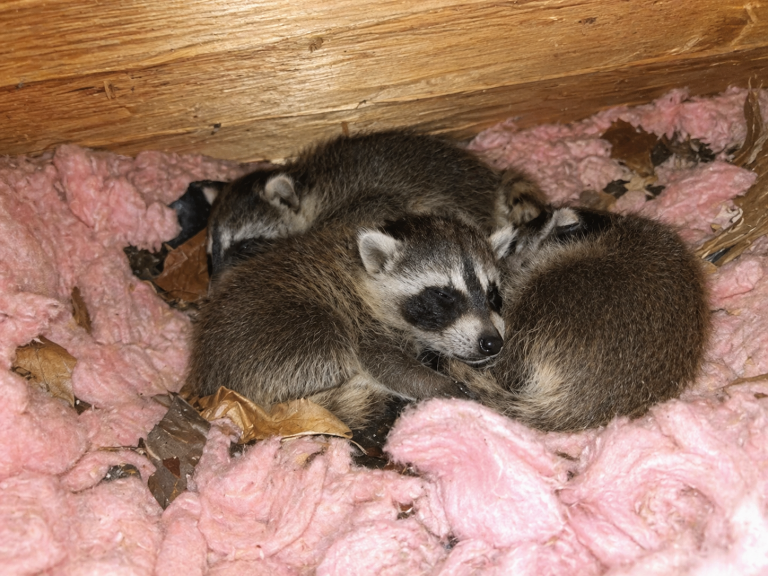
Why You Should Not Handle It Yourself
It can be tempting to try and remove baby raccoons on your own, especially if you believe you can access the nest. However, this is one of the most common mistakes homeowners make.
Mother raccoons are extremely protective. If they sense a threat to their babies, they may become aggressive. This puts you at risk of bites or scratches. There are also health concerns. Raccoons can carry parasites and bacteria that are harmful to humans. Disturbing a nest without proper protection increases the risk of exposure.
Another issue is separation. Removing the babies without a proper plan can leave them orphaned in the attic or cause the mother to damage your home trying to get back to them. Handling the situation incorrectly often leads to more damage and a longer, more complicated removal process.
What Happens If You Leave Them Alone
Some homeowners choose to wait, hoping the raccoons will leave on their own. While this may eventually happen, it often leads to more problems in the meantime. As the babies grow, they become more active and begin exploring the attic. This increases the amount of damage to insulation and wood structures. The longer they remain, the more waste accumulates. This leads to stronger odours and greater contamination.
In some cases, the raccoons may even expand their living area or create additional entry points. What starts as a single nest can turn into a much larger issue. Waiting rarely solves the problem in a clean or controlled way.
The Safe and Humane Way to Remove Baby Raccoons
Removing baby raccoons requires a careful, step-by-step approach. The goal is not just to remove them, but to do so in a way that keeps the family together and prevents re-entry. The process typically begins with an inspection. A wildlife technician will locate the entry point and identify where the babies are nesting. The babies are then carefully removed from the attic and placed in a secure, heated reunion box outside near the entry point. This allows the mother to find them and relocate them to another den site.
Once the babies are out, a one-way door is installed over the entry point. This allows the mother to leave but prevents her from getting back inside. After the family has moved on, the entry point is sealed permanently to prevent future issues. This method is both humane and effective, and it follows Ontario wildlife regulations.
Timing Is Important
Baby raccoon situations are time-sensitive. Acting too early or too late can create complications. If removal is attempted without considering the babies, they may be left behind. If you wait too long, the babies become mobile and harder to contain, increasing the risk of them spreading throughout the attic.
Professional technicians understand the timing and behaviour of raccoons. They know when babies are likely to be present and how to handle each stage of development. This knowledge helps ensure the process is completed safely and efficiently.
Damage Caused by Baby Raccoons
Even though they are small, baby raccoons contribute to the overall damage in your attic. As they grow, they begin to move around, adding to the wear and tear already caused by the mother. Insulation is often heavily disturbed or destroyed. Nesting areas become compacted and contaminated. Droppings and urine build up, creating strong odours and potential health risks.
In some cases, the activity can extend to wiring or wood structures, especially as the babies become more active. Addressing the issue early can reduce the amount of cleanup and repair needed afterward.
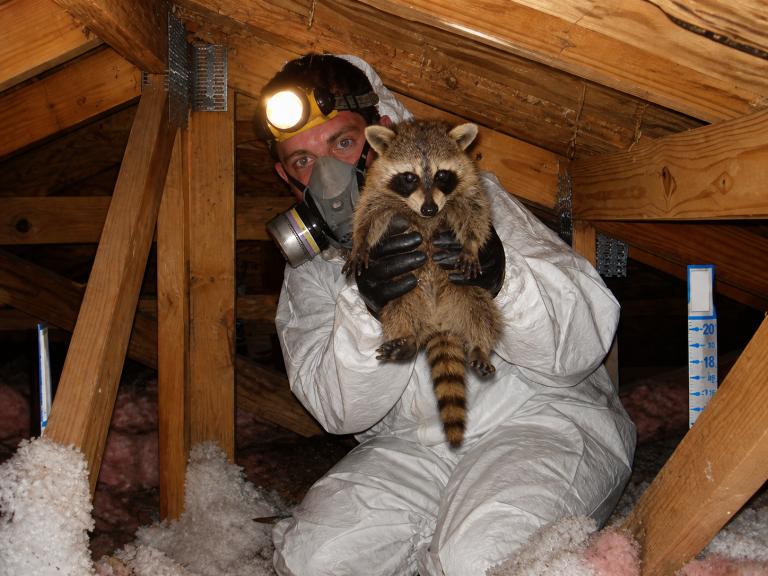
Preventing Future Raccoon Problems
Once the raccoons are removed, the focus should shift to prevention. The entry point used by the raccoon must be properly sealed with durable materials. Common areas that need attention include roof vents, soffits, and weak sections of the roofline. Reinforcing these areas helps prevent future wildlife from gaining access.
Regular home maintenance also plays a role. Checking for loose materials, trimming branches away from the roof, and securing food sources can reduce the chances of another raccoon targeting your home. Prevention is the final step in making sure the problem does not return.
When to Call a Professional
If you suspect baby raccoons in your attic, it is best to call a professional as soon as possible. Early action can prevent further damage and ensure the situation is handled correctly. Even if you are unsure, a professional inspection can confirm what is happening and provide a clear plan for removal.
Wildlife issues involving babies are more complex than standard removals. They require experience, proper equipment, and an understanding of animal behaviour. Trying to handle it alone often leads to unnecessary stress and additional costs.
Book Raccoon Removal with Burlington Wildlife
Baby raccoons in the attic need to be handled with care. The right approach protects your home while ensuring the animals are removed safely and humanely. Burlington Wildlife specializes in raccoon removal, including situations involving mothers and babies. Our team provides thorough inspections, safe removal methods, and long-term solutions to keep your home protected.
Contact Burlington Wildlife to book your inspection and get expert help with raccoons in your attic.