Raccoons are one of the most destructive wildlife animals that can enter a home in Burlington. Once they gain access to your attic, the damage often starts immediately. What begins as a small entry hole can quickly turn into widespread issues involving insulation, wood structures, wiring, and air quality.
Many homeowners don’t realize the extent of the problem until the damage becomes severe. Knowing what to look for can help you catch a raccoon infestation early and avoid costly repairs. If you suspect activity in your attic, understanding the signs of damage is an important first step.
Why Raccoons Cause So Much Damage
Raccoons are strong, intelligent animals with dexterous front paws. They are capable of tearing through roofing materials, pulling apart insulation, and manipulating objects in ways most wildlife cannot.
When a raccoon enters an attic, it is usually looking for shelter. Female raccoons, in particular, seek out attics as nesting areas during spring. Once inside, they begin modifying the space to suit their needs. This is where the damage starts.
Unlike smaller pests that stay hidden, raccoons move around frequently and use large portions of the attic. Their size and behaviour lead to widespread disruption rather than isolated damage.
Torn and Displaced Insulation
One of the most common signs of raccoon damage is disturbed insulation. Raccoons flatten insulation as they walk across it, creating visible trails throughout the attic. They also tear insulation apart to build nests. These nests are often located in corners or along the edges of the attic and may appear as piles of compressed or shredded material.
In Burlington homes, pink fiberglass insulation is common, and when raccoons disturb it, the difference is easy to spot. Clean, evenly distributed insulation becomes uneven, clumped, and scattered. This type of damage reduces the effectiveness of your insulation, which can impact your home’s energy efficiency and increase heating and cooling costs.
Droppings and Urine Contamination
Raccoons do not use your attic discreetly. They tend to create designated areas where they repeatedly leave droppings and urine. Over time, this leads to significant contamination. These areas are often referred to as latrine sites. They can be found near nesting areas or along frequently used pathways. The buildup can become quite large if the raccoons remain in the attic for an extended period.
The smell associated with raccoon waste is strong and unpleasant. It can begin to seep into the living areas of your home, especially during warmer months. Beyond the odour, this contamination poses health risks. Raccoon droppings can carry bacteria and parasites, such as roundworm, that affect indoor air quality. Proper cleanup is essential after removal.
Damage to Wood and Structural Components
Raccoons often chew, scratch, and claw at wooden structures inside the attic. This can include roof decking, rafters, and support beams. While some of this damage may appear minor at first, repeated activity can weaken these structures over time. In severe cases, sections of wood may need to be repaired or replaced.
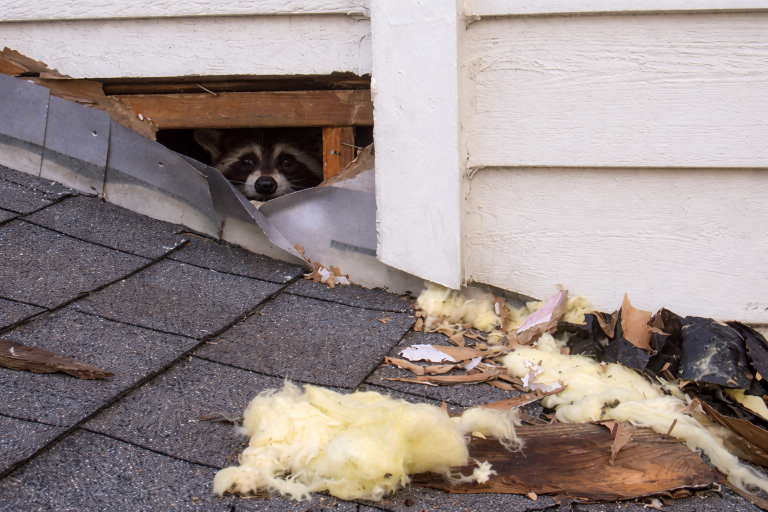
The initial entry point is often where the most obvious structural damage occurs. Raccoons may tear through wood and roofing materials to create or expand an opening. These entry holes can grow larger with continued use. If left untreated, this type of damage can lead to leaks, drafts, and further deterioration of the roof.
Damaged Wiring and Fire Hazards
One of the more serious risks associated with raccoons in the attic is damage to electrical wiring. Raccoons may chew on wires, either out of curiosity or while clearing space for movement.
Exposed or damaged wiring increases the risk of electrical issues and potential fire hazards. This is especially concerning in older homes where wiring may already be vulnerable.
Even if the damage is not immediately visible, it is important to have wiring inspected after a raccoon infestation. Hidden issues can develop over time and lead to costly repairs if not addressed.
Entry Point Damage on the Roof
The damage caused by raccoons is not limited to the attic. The entry point on the exterior of the home is often one of the most visible signs. Raccoons commonly break into homes through soffits, roof vents, and weak sections of the roofline. You may notice bent or missing soffit panels, lifted shingles, or torn vent covers.
In many Burlington homes, these entry points are located near roof edges or corners where materials may already be under stress. If the entry point is not properly repaired and reinforced, it will remain a weak spot that can attract future wildlife activity.
Nesting Materials and Debris
Raccoons build nests using whatever materials are available in the attic. This often includes insulation, cardboard, leaves, and other debris they bring in from outside.
These nests are usually located in sheltered areas and may be difficult to see without a thorough inspection. However, the presence of nesting material is a clear sign that raccoons have been living in that space. If baby raccoons are present, the nest will be more defined and centralized. You may also hear softer noises such as chirping or whining coming from the area.
Persistent Noises and Movement
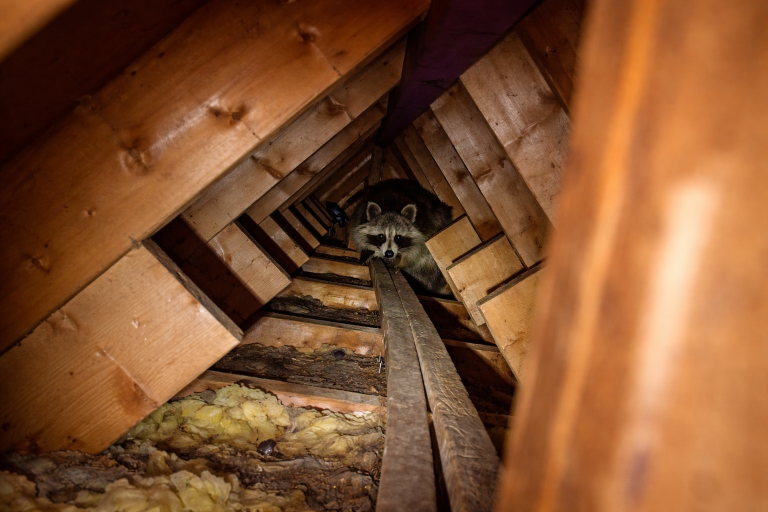
Damage in the attic is often accompanied by noticeable sounds. Raccoons are not quiet animals, and their activity can be heard clearly. Homeowners often report heavy footsteps, scratching, and movement above their ceiling. These noises are usually more frequent at night, but they can occur during the day if babies are present. The combination of noise and visible damage is a strong indicator that raccoons are actively using the attic space.
Why It’s Important to Act Quickly
Raccoon damage does not stay contained. The longer the animals remain in your attic, the more extensive the damage becomes.What starts as a small issue can quickly grow into a larger problem involving insulation replacement, structural repairs, and contamination cleanup.
Acting early can significantly reduce the overall cost and disruption. Delaying removal also increases the likelihood of secondary issues, such as parasites spreading into the home or additional animals moving in.
Professional Inspection and Repair
Identifying raccoon damage is only part of the solution. A professional inspection is needed to fully assess the situation and determine the best course of action.
Wildlife technicians are trained to locate all signs of activity, including hidden damage that may not be immediately visible. They can also identify entry points and recommend repairs to prevent future access. Proper removal and exclusion ensure that the raccoons are removed safely and that your home is protected moving forward.
Book Raccoon Removal with Burlington Wildlife
If you have noticed signs of raccoon damage in your attic, it is important to address the problem as soon as possible. Ignoring the issue can lead to more extensive repairs and ongoing stress.
Burlington Wildlife provides professional raccoon removal services designed to handle the problem from start to finish. Our team offers thorough inspections, humane removal, and long-term solutions to keep your home protected.
Contact Burlington Wildlife today to book your inspection and get expert help with raccoon damage in your attic.